Blog

  • Inaugural Democracy Forum

    Inaugural Democracy Forum

    Hello everyone! Welcome to the inaugural Democracy Forum.

    Every other Wednesday, we will share this online space to discuss important questions and topics that have arisen from the Democracy Talks in the week before, or from blog posts and current events.

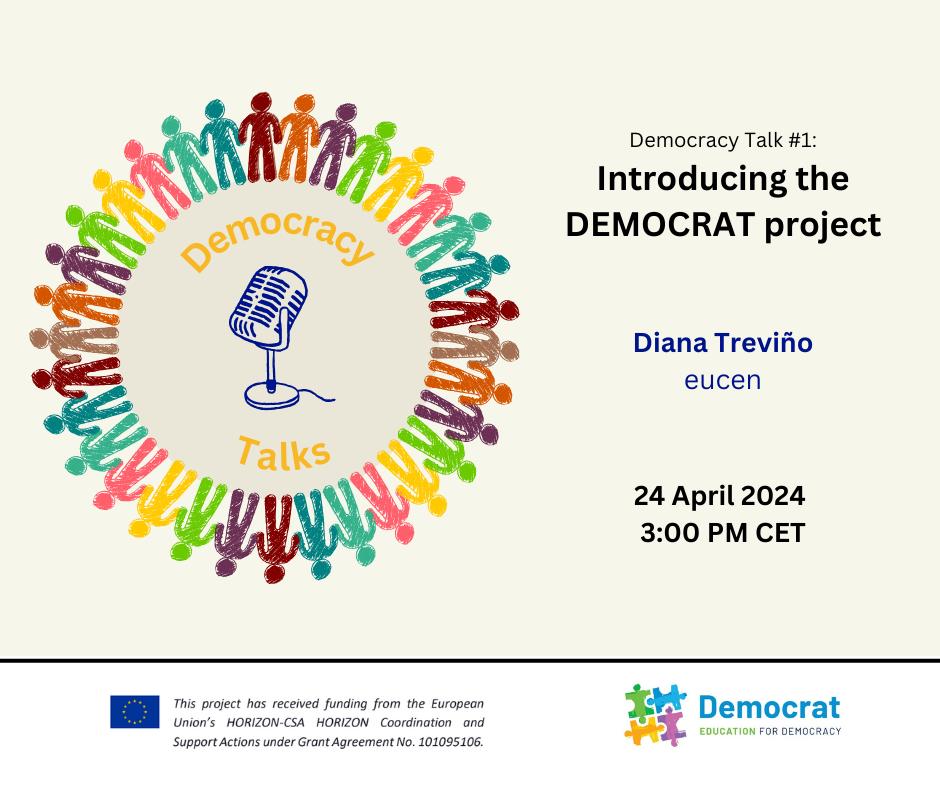
    Last week, our Democracy Talk featured special guest Diana Treviño from the European Universities Continuing Education Network (EUCEN), one of the project partners for DEMOCRAT. She introduced the project and discussed how it operates, its goals, and the challenges and opportunities presented by its multinational design. Diana spoke with Vanina, the online community organizer of the Agora from FOGGS, about the importance of local pilots in the responsible democratic citizenship framework and how current curricula have gaps that need to be addressed.

    We invite you to rewatch the talk here: Democrat Horizon on YouTube and add your opinions on the following questions or anything related to the discussion with Diana:

    1. The EU faces various global challenges, including climate change, socio-economic gaps, and geopolitical uncertainties. How does the DEMOCRAT project plan to address these challenges through education?
    2. Do you have examples of successful living labs (related to the project or in general)? What approaches worked and what did not?
    3. What innovative teaching methods are currently being used in the EU to involve various stakeholders in the curriculum redesign process?
    4. How can we address linguistic and cultural differences in different national contexts regarding education for democracy?

    Feel free to answer any of these questions or add a comment inspired by this discussion.

    You can add your comments below and follow the discourse here: Democrat Horizon Discourse

  • News from Second Polish Living Lab

    News from Second Polish Living Lab

    Written by Sara Faściszewska

    On the 15th and 16th of March, another meeting of the Polish Living Lab’s group took place in Kraków. This time around, Jagiellonian University provided a safe place for the discussion regarding equality in school settings and for the exchange of inspirational ideas for local pilot projects. Two days of intensive workshops passed in the blink of an eye, during which the group of teachers, educators and, NGO representatives worked together on developing new methods to aid the implementation of civic engagement in Polish schools.  

    The workshops were divided into two diverse types of activities, to provide a more holistic approach to the accomplishment of the goals of the project. On the first day, on Friday, members of the Polish Living Lab had an opportunity to participate in a group discussion about how equality is understood at school and what it means to apply its values on local grounds. Members mentioned similar obstacles in this matter and then shared the determination to overcome them through their daily commitment and possible institutional changes. Our inspiration session did not end there. Afterwards, our members engaged in a conversation with a representative of civil society and the Plenipotentiary of the Mayor of the City of Kraków for Equality Policy who work tirelessly to create a more inclusive educational environment in the city. They discussed the inclusion of youth from various minorities, such as Roma children, children with experience of migrations, LGBTQ+ youth, and pupils struggling with mental health issues, and strategies to support them and their well-being at school (eg. Cultural mediators, educational materials prepared by the municipality, the rating of LGBTQ+ schools).   

    On the second day, the Polish Living Lab focused more on practical activities. To begin the work, participants received a brief update on Estonian’s Living Lab experience, thanks to Laif Kalev’s visit and inspiring presentation. Members had a brainstorming session to define major problems, on which they want to focus their pilot projects. After that, people with similar challenges or thematic interests gathered to develop some initial solutions, which might in the future evolve into their local projects. By the end of the day, our participants created four preliminary groups, concerning various fields of civic education, which included for example: HerStory Initiative, supporting Youth in the adulthood process and creating an equal and civically engaged school. Right now, our motivated members have time to dwell deeper into their ideas and make some first steps towards the realisation of the projects. We cannot wait to see the development of these exciting ideas! The next meeting, this time online, is supposed to take place in April when participants will be able to show their progress on the work.  

  • Living Labs: A Pathway to Democratic Education

    Living Labs: A Pathway to Democratic Education

    Authors: Ebru Eren & Benjamin Mallon

    In our fast-changing world, fostering democratic values and civic engagement among young people is more critical than ever. As societies face complex challenges like climate change, poverty, human rights violations, cybersecurity threats, educational disparities, growing population and pollution, migration and refugee crisis, political instability and conflict, pandemics, artificial intelligence, loss of biodiversity and more, it’s vital to equip individuals, especially young people, with the tools to participate actively in democracy. One promising method is Living Labs. But what are they, and how can they promote democratic education? Let’s explore this concept and its potential role in Ireland. 

    Understanding Living Labs

    Living Labs are dynamic platforms for collaborative problem-solving and innovation. They provide real-world settings where diverse stakeholders work together to develop, test, and enhance solutions for complex challenges. These environments act as live laboratories, enabling practical application of ideas, fostering mutual learning, and allowing continuous improvement. 

    In the context of education, Living Labs offer a unique opportunity to reimagine the learning experience and cultivate democratic values among learners. By bringing together experts, practitioners, and young individuals, these labs facilitate dialogue, collaboration, and innovation. Participants can engage in hands-on activities, brainstorming, explore new pedagogical approaches, and reflect on their roles as active citizens in a democratic society.

    The Irish Context: A Plan for Living Labs

    Dublin City University is the Irish partner in a Europe-wide Horizon funded project, ‘DEMOCRAT – Education for Responsible Democratic Citizenship’ which explores the integration of ‘Education for Democracy’ into education systems across the EU. As part of the project an Irish ‘Living Lab’, has been set up in DCU. The project, running from 2023 to 2026, will conduct six Living Labs workshops focusing on different aspects of education for democracy. These workshops provide a platform for experts to identify challenges, develop solutions, and conduct research to create an education for democracy framework. Irish Living Labs involves diverse stakeholders, including teachers, teacher educators, researchers, policymakers and young people. This inclusive approach fosters collaboration and co-creation, promoting a sense of ownership and collective responsibility.

    The core of the Living Labs initiative is the co-creation of an education for democracy framework, covering concepts like democracy, political participation, sustainable development, and responsible citizenship. Through multidisciplinary collaboration, stakeholders will develop a robust framework guiding curriculum design and teaching practices. Moreover, the Living Labs will serve as a research platform to understand participant experiences and the impact of democratic education initiatives. This research will inform effective strategies for promoting democratic values and civic engagement among young people. In addition to research, the Living Labs will implement local pilot projects, allowing learners to engage in hands-on activities promoting democratic values and active citizenship. These projects will adapt the curriculum to local contexts and incorporate innovative teaching methods.

    In conclusion, Living Labs offer a promising approach to democratic education, providing a platform for collaboration and innovation.  Through inclusive participation and research, these labs have the potential to shape the future of democratic education, empowering young people to be active and engaged citizens in their communities and beyond. 

  • Democracy Degree Zero: A Commentary on The City of Children

    Written by Beatriz Toscano (part of the German National team)

    Since its inception, Phenomenology has aimed to strip away layers of historical interpretation that obscure our understanding, aiming to reveal issues in their most basic and unadulterated form. Philosophy has had to work to unveil the most pressing problems of human existence as if they were science. As any good chemistry experiment has had to depart from distilled water, so too have philosophical inquiries had to be brought to a zero point of untarnished clarity.  Husserl and his contemporaries believed that the excesses of the psyche and subjectivity have complicated our understanding of essential human dilemmas, necessitating a return to a more direct and untarnished approach to this clarity.

    The tracing of phrases back to their supposedly original and unadulterated origins has since been preserved in popular culture as a longing, and even a delusion of our time. Applying this principle to society’s complexities, such as democracy, by simplifying them for children’s understanding, exemplifies this trend. By removing democracy’s “obscuring” layers and exposing it in what is assumed to be its pure form to children, we seek to understand its essence. However, this narrative often ends in a cautionary tale of innocence lost to authoritarianism, as seen in allegories such as Animal Farm by George Orwell.

    The Kinderstadt or Ottopia project in Magdeburg, Germany, embodies this exploration. It allows children to construct a societal model from the ground up, echoing the pioneers of Qatan. Is democracy humanity’s natural state? Do systems built by the so-called innocent lead to more just and equal societies, or do they devolve into selfishness and corruption? Ottopia offers a playground for these experiments, with children experiencing governance firsthand.

    As reported by The Taz, in Ottopia, children take the helm, engaging in activities from overthrowing a monarch to addressing labor shortages. Ottopia took place for the second time in August 2023 on the grounds of the European Youth Education Center in Magdeburg. For two weeks, up to 450 children were able to work in around 40 professions, found start-ups, learn at the children’s university, and govern the city. However, governance in Ottopia is not without guidance; a king outlines decision-making processes, including campaigns and community health initiatives.

    But why would we think that learning democracy is about starting from scratch and less about precisely, throwing oneself in the muddy swamp of history, struggles, and conflicts? Ottopia presents a specific vision of democracy, perhaps losing sight of the broader historical narratives that shape our understanding of governance. The project’s growing popularity suggests a fascination with experiencing democracy in a controlled environment, yet it raises concerns about whether such simulations can truly capture the essence of democratic engagement.

    A critical observation, not fully addressed in the article (see below in German), is the importance of exposing children to the full spectrum of human experience, including their capacity for empathy and generosity as well as their potential for darkness. This acknowledgment of the human condition, with all its flaws and virtues, is essential for a comprehensive understanding of democracy and our place within it.

    Commentary on

    https://taz.de/Demokratie-lernen/!5878876/

    [Katja Hensel, 12. Sept. 2022]

  • Project DIOK: Democracy and Human Rights Education Pilot Project in Primary Schools for the 2022-2023

    Project DIOK: Democracy and Human Rights Education Pilot Project in Primary Schools for the 2022-2023

    In Finland, extensive research and initiatives are dedicated to fostering democracy education. One notable example from the recently concluded project, “Democracy and Human Rights Education Pilot Project in Primary Schools for the 2022-2023 Academic Year,” exemplifies this commitment. Coordinated by the Finnish National Agency for Education, this publication highlights successful and effective practices from the project executed during the 2022-2023 academic year. Funded through the “Right to Learn” initiative and the national strategy for children, this pilot aimed at elementary schools is part of the broader effort to roll out Prime Minister Sanna Marin’s Democracy Program 2025.

    Educational authorities from nine regions across the country, beneficiaries of government grants, bring forward their most impactful experiences from the past year. The contributions detail the execution of activities and the comprehensive learning that ensued. Furthermore, the document features insights from university experts in democracy and human rights education who engaged directly with the pilot schools, alongside contributions from involved NGOs and organizations.

    The final report of the project, titled “Effective Practices for Implementing Participation in Primary Schools” (Finnish National Agency for Education, REPORTS AND REVIEWS 2023: 4a), offers a comprehensive overview of the project’s outcomes and insights. This document serves as a valuable resource for educators and policymakers alike, providing detailed examples of how to enhance participatory practices within the educational framework of primary schools.

    An example of a school project in Children’s Rights Week

    Sari Muhonen, a lecturer from the University of Helsinki’s Viikki Teacher Training School, writes about their experience of a participation project executed in their school. The University of Helsinki’s Viikki Teacher Training School is a vibrant example of actively engaging students in democracy and human rights education. Located in the bustling environment of Viikki, Helsinki, this large university-affiliated comprehensive school, with its thousand students, becomes particularly lively during “Children’s Rights Week,” a theme week dedicated to engaging various stakeholders more robustly than in previous years.

    During this week, the focus is especially on the primary school section, although the activities are visible throughout the whole school. A central feature of this initiative is the UNESCO wall within the school, serving as a community focal point and a symbol of the collective spirit fostered by the project.

    The school’s active student councils, particularly the “Little Parliament” in the primary section, meet weekly to orchestrate communal activities. Through these councils, all students are invited to plan, share, and experience Children’s Rights Week, making it a collaborative effort that integrates democracy skills, community building, and human rights into the educational and operational culture of the school.

    The process unfolds with an initial information and planning survey conducted in the classrooms, facilitated by teachers and a specialist from the University of Helsinki. This approach allows students to voice their interests and preferences for the week’s activities, fostering a sense of ownership and engagement in the events planned.

    Noteworthy activities during the week include morning assemblies, information sessions, drama workshops, and interactive sessions with various NGOs and experts. This collective effort culminates in a school-wide engagement, with students actively participating in discussions, workshops, and creative projects that reflect on and advocate for children’s rights.

    Reflecting on the week, organizers and collaborators highlight the success of the initiative in fostering a community spirit and engaging students meaningfully. The planning and execution of such a thematic week demonstrate the power of collaborative effort in promoting democracy and human rights education. It is an iterative process, with each year offering opportunities to refine and enhance the engagement based on previous experiences.

    This initiative by Viikki Teacher Training School stands as a testament to the effectiveness of community-based approaches in embedding democracy and human rights education within the school culture. It exemplifies how educational institutions can play a pivotal role in empowering students to become active, informed, and conscientious citizens.

    For further reading and resources related to this initiative, the school provides access to various materials, including UNESCO school activities, student council operations, and detailed planning and reflections on Children’s Rights Week.

    You can follow the link to see these resources below (in Finnish):

    Muhonen, S. (Hyväksytty/painossa). Oikeus osallisuuteen – Matkakertomuksia demokratia- ja ihmisoikeuskasvatukseen: DIOK Viikki: Yhdessä vaikutamme – matkakertomus Lapsen oikeuksien viikon osallistavasta prosessista. Changing education MOOC – online course.
    In Finland, extensive research and initiatives are dedicated to fostering democracy education. One notable example from the recently concluded project, “Democracy and Human Rights Education Pilot Project in Primary Schools for the 2022-2023 Academic Year,” exemplifies this commitment. Coordinated by the Finnish National Agency for Education, this publication highlights successful and effective practices from the project executed during the 2022-2023 academic year. Funded through the “Right to Learn” initiative and the national strategy for children, this pilot aimed at elementary schools is part of the broader effort to roll out Prime Minister Sanna Marin’s Democracy Program 2025.

    Educational authorities from nine regions across the country, beneficiaries of government grants, bring forward their most impactful experiences from the past year. The contributions detail the execution of activities and the comprehensive learning that ensued. Furthermore, the document features insights from university experts in democracy and human rights education who engaged directly with the pilot schools, alongside contributions from involved NGOs and organizations.

    The final report of the project, titled “Effective Practices for Implementing Participation in Primary Schools” (Finnish National Agency for Education, REPORTS AND REVIEWS 2023: 4a), offers a comprehensive overview of the project’s outcomes and insights. This document serves as a valuable resource for educators and policymakers alike, providing detailed examples of how to enhance participatory practices within the educational framework of primary schools.

    An example of a school project in Children’s Rights Week

    Sari Muhonen, a lecturer from the University of Helsinki’s Viikki Teacher Training School, writes about their experience of a participation project executed in their school. The University of Helsinki’s Viikki Teacher Training School is a vibrant example of actively engaging students in democracy and human rights education. Located in the bustling environment of Viikki, Helsinki, this large university-affiliated comprehensive school, with its thousand students, becomes particularly lively during “Children’s Rights Week,” a theme week dedicated to engaging various stakeholders more robustly than in previous years.

    During this week, the focus is especially on the primary school section, although the activities are visible throughout the whole school. A central feature of this initiative is the UNESCO wall within the school, serving as a community focal point and a symbol of the collective spirit fostered by the project.

    The school’s active student councils, particularly the “Little Parliament” in the primary section, meet weekly to orchestrate communal activities. Through these councils, all students are invited to plan, share, and experience Children’s Rights Week, making it a collaborative effort that integrates democracy skills, community building, and human rights into the educational and operational culture of the school.

    The process unfolds with an initial information and planning survey conducted in the classrooms, facilitated by teachers and a specialist from the University of Helsinki. This approach allows students to voice their interests and preferences for the week’s activities, fostering a sense of ownership and engagement in the events planned.

    Noteworthy activities during the week include morning assemblies, information sessions, drama workshops, and interactive sessions with various NGOs and experts. This collective effort culminates in a school-wide engagement, with students actively participating in discussions, workshops, and creative projects that reflect on and advocate for children’s rights.

    Reflecting on the week, organizers and collaborators highlight the success of the initiative in fostering a community spirit and engaging students meaningfully. The planning and execution of such a thematic week demonstrate the power of collaborative effort in promoting democracy and human rights education. It is an iterative process, with each year offering opportunities to refine and enhance the engagement based on previous experiences.

    This initiative by Viikki Teacher Training School stands as a testament to the effectiveness of community-based approaches in embedding democracy and human rights education within the school culture. It exemplifies how educational institutions can play a pivotal role in empowering students to become active, informed, and conscientious citizens.

    For further reading and resources related to this initiative, the school provides access to various materials, including UNESCO school activities, student council operations, and detailed planning and reflections on Children’s Rights Week.

    You can follow the link to see these resources below (in Finnish):

    Muhonen, S. (Hyväksytty/painossa). Oikeus osallisuuteen – Matkakertomuksia demokratia- ja ihmisoikeuskasvatukseen: DIOK Viikki: Yhdessä vaikutamme – matkakertomus Lapsen oikeuksien viikon osallistavasta prosessista. Changing education MOOC – online course.
  • Defending Democracy: Insights from the European Economic and Social Committee Conference

    Defending Democracy: Insights from the European Economic and Social Committee Conference

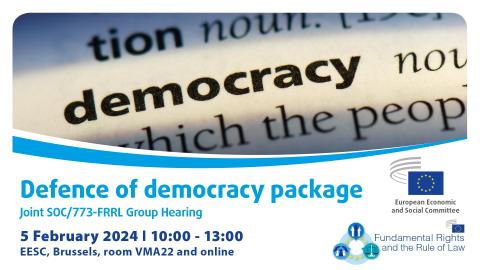
    In a pivotal moment for the European Union, the European Economic and Social Committee (EESC) hosted the “Defence of Democracy Package” conference on February 5, 2024. This significant event aimed to shed light on the European Commission’s initiative to fortify democratic values, promote free and fair elections, combat disinformation, and enhance civic space and citizen participation. The Defence of Democracy Package, unveiled by the European Commission, has sparked both interest and concern within civil society. The initiative holds the promise of strengthening democratic principles across member states, but some fear that addressing interference from non-EU countries may inadvertently impede civic space.

    The conference served as a platform for diverse stakeholders to engage in constructive dialogue, offering their perspectives on the package and contributing to the development of the related EESC opinion. The conference commenced with insightful presentations reflecting the interests of European civil society organizations. One of the central themes revolved around increasing the participation of young people in voting for democratic parties. Recognizing the pivotal role of the youth in shaping the future, participants explored innovative strategies to capture their attention and foster active civic engagement. Within the conference, a speaker emphasized investing in democratic education as a cornerstone for preserving fundamental human rights and civic spaces. Educational initiatives should aim not only to cultivate informed citizens but also to instill a sense of responsibility and commitment to democratic values.

    The discussions underscored the interconnectedness of democratic education, free and fair elections, and the fight against disinformation. In conclusion, the “Defence of Democracy Package” conference provided a vital platform for stakeholders to engage in meaningful discussions about the future of democracy in the European Union. The collaborative efforts of civil society, the European Commission, and the EESC showcased a commitment to addressing the challenges faced by democracies today. As the initiative moves forward, it is imperative that the concerns raised are carefully evaluated, and solutions are devised to uphold the principles of democracy without compromising civic space. The journey towards a resilient democracy requires continuous dialogue, education, and adapt

  • News from the Polish Living Lab

    News from the Polish Living Lab

    This past week, the Polish Living Lab gathered for the 4th time to share pedagogical tools, methods, and projects they are using in their classrooms and communities to promote education for democracy. This exchange provides inspiration for our daily work and ideas for local pilot projects. All insights will come from the group itself. The members of our Living Lab share their experiences on applying tools such as participatory budgeting in schools, community fridges in schools, interactive tools to promote student engagement, and a holistic approach to teaching social studies.

    The Polish Living Lab brings together over 20 teachers, educators, and NGO representatives working on civic education, participatory democracy, non-violent communication, discrimination, multiculturalism, and dialogue. The members of the Living Lab come from 13 cities and towns, from larger cities such as Warsaw, Łódź, Wrocław, to medium-sized towns and villages, mostly from Małopolska, Silesia, and Lower Silesia, but also from Subcarpathia, Łódź Voivodeship, and Masovia. Teachers include Education for Democracy in the teaching of their subjects (e.g., social studies, English, history) or in tutorials. Some have introduced additional projects in their schools on democracy, equality, ecology, and participatory budgeting. Quite a few support student councils in their schools. Among the topics they are interested in and teach, members of the Living Lab mentioned civic participation, human rights, inclusivity, the Holocaust, violence, women’s rights, children’s rights, communication, self-organization, peer advocacy, and inclusion of people with disabilities.

    After a series of informational meetings for teachers and civil society representatives, the group was formed during a meeting in Krakow, hosted by the Jagiellonian University. During this meeting, we connected, networked, and unpacked the concept of democratic competence. We continued to communicate online until the next meeting in December when we received an update from the Transnational Living Lab meeting in Helsinki. The next inspiration session will take place before another offline meeting in Krakow in March. The group was set up at a time of political exhaustion and anticipation, when many teachers were struggling with an overloaded curriculum and the reluctance of some principals and school communities to include elements of education for democracy in the classroom, due to pressure from state institutions leaning towards authoritarian tendencies. With a new government, the prospect of education reform with a focus on democracy and inclusion has returned. We expect the members of our Living Lab to contribute to this change with their expertise and daily commitment.

  • A Global Perspective on Responsible Democratic Citizenship

    A Global Perspective on Responsible Democratic Citizenship

    by Georgios Kostakos*

    The modern notion of “citizenship” is connected to the nation state and has emerged to a large extent from the struggle for civic rights in Western societies. In recent years the term “citizenship” or “citizen” is occasionally used in a broader sense, informally as in “citizen of the world”, or even formally, as in “citizen of the European Union”. Can there be, however, citizenship concepts, attitudes and arrangements vis-à-vis quasi-sovereign or supranational institutions, at the regional (e.g. EU) or global (e.g. the UN) level, or is the term citizen/citizenship used metaphorically in such cases?

    Let us zoom in to some key aspects of citizenship to explore whether they also apply to institutions outside the nation state. The main reference document, on which often the oath of citizenship and/or of public service is taken is a state’s constitution. Is there such a thing in the UN / global context and in the regional / EU context? Actually, the founding document of the UN is the UN Charter, which has a Gospel-like aura, even if it is often respected in the breach. Together with the Charter, the Universal Declaration of Human Rights completes the core constitutional duo of the post-World War II global governance system. The EU may have no concise constitution as such (attempts to get one have failed, as of now), but its “founding agreements”, including the Rome, Maastricht and Lisbon Treaties, play this role and are a clear reference for its citizens.

    A creation story or “founding myth” is also part of the shared heritage that determines citizenship at the nation state level. It can be the liberation struggle against a colonial power, or the fight for the rights of the people against a monarchy or an oligarchy. The epic of World War II plays that role for both the UN and the EU, as their creation was part of the effort to avoid any repetition of such carnage and destruction, in the world as a whole and on the European continent, respectively.

    A sense of identity and solidarity is another key aspect of citizenship at the state level. But is it also evident at regional and global level? The answer is positive, if one considers the “EU Citizenship package” that includes various legal texts and administrative provisions in support of the rights of people having the citizenship of any and all EU countries, along with a set of funding programmes that distribute money to farmers, artists, researchers and numerous other groups across the EU. The various international human rights instruments, the work of institutions like the Human Rights Council and the UN High Commissioner for Refugees, as well as multilateral funding mechanisms of the broader UN system, like UNDP, UNICEF, the World Bank, IFAD, the Green Climate Fund, etc. also play the same role at the global level, even if within much narrower financial margins.

    Another level of governance, which has recently emerged but cannot be ignored, is that of cyberspace. Large numbers of people, young people in particular, spend large parts of their time / of their lives online. The term “cyber citizen” or “digital citizen”§ has acquired de facto meaning and should be taken into account too when talking about citizenship beyond the nation state.  What is the source of legitimacy and “sovereignty” in cyberspace? No founding document as such, no unifying founding myth either. One has to go to individual “cyber kingdoms” to get the founding documents and narratives of digital superpowers such as Google, Microsoft, Facebook/Meta or X (formerly known as Twitter), with many more smaller “princedoms” and communities of all sorts offering a sense of identity and solidarity to like-minded groups of people.

    In conclusion, human beings today have to grapple with many overlapping identities and citizenships, which can be seen as complementary, unless something goes wrong in the relations among the various levels of governance each one of them is based. While state-level citizenship remains the most defining for an individual, not least because of nationality documents and enforcement arrangements maintained at that level, other citizenships or “meta-citizenships” increasingly become the “locus” of loyalty and engagement. No Education for Democracy (EfD) curriculum, even if controlled by state authorities as part of national education systems, can ignore the emerging broader notions and practices of citizenship at regional, global and digital level. They have to be taken into account and harmonized to achieve the purported shared goal of individual and societal well-being, human security and resilience across all levels and borders.

    _________________

    * Based on a presentation made by Dr. Georgios Kostakos at the ECPR General Conference 2023, Charles University, Prague, 7 September 2023. Georgios Kostakos is Co-founder and Executive Director of the Brussels-based Foundation for Global Governance and Sustainability (FOGGS), which inter alia focuses on ethics in global governance and a new globalization narrative, the establishment of a Global Resilience Council, and rethinking education for the digital era. About half of his thirty-year-long work experience has been with the UN, including the Executive Office of the UN Secretary-General, the High-level Panel on Global Sustainability, and the UN Framework Convention on Climate Change (UNFCCC).

    § See previous blog post on “Embracing the Digital in Democratic Citizenship Education” by Janette Hughes, Jennifer A. Robb & Molly Gadanidis. Interesting that the apparently very relevant web site https://www.cybercitizenship.org/ does not seem to have any human names associated with it…

  • Embracing the Digital in Democratic Citizenship Education

    Embracing the Digital in Democratic Citizenship Education

    by Janette Hughes, Jennifer A. Robb & Molly Gadanidis

    We are more connected to the world than we’ve ever been. Globalization and increasingly affordable digital technologies have diversified the communities we engage in, both on- and offline. This is exceedingly true for youth, most of whom own or have regular access to a smartphone[1],[2] and participate daily in digital spaces.[3] While these developments have created countless opportunities for youth to express themselves, make new friends, and learn in ways that have only recently become possible, their newly established membership of the global community requires a dynamic set of knowledge, skills, and attitudes that can help them navigate the complexities of an interconnected world.

    Schools around the world have implemented various forms of citizenship education with the goal of preparing students to be productive, responsible, and ethical members of society. These approaches generally take one of three forms:

    • Global citizenship: “The social, environmental, and economic actions taken by individuals and communities who recognise that every person is a citizen of the world.”[4]
    • Democratic citizenship: “Equipping learners with knowledge, skills and understanding and developing their attitudes and behaviour, to empower them to exercise and defend their democratic rights and responsibilities in society, to value diversity and to play an active part in democratic life.”[5]
    • Digital citizenship: “Thinking critically, behaving safely, and participating responsibly in the digital world.”[6]

    Increasing visibility of social inequities and political unrest around the world have led to the development of hybrid models of citizenship education designed to address the intersections of global, democratic, and digital citizenship, including the Council of Europe’s Digital Citizenship Education Handbook[7]. However, an effective balance has yet to be struck. Toward Democrat’s goal of preparing students to “understand and intervene in the social conditions and political-economic processes that they face,”[8] we recognize the need for innovative approaches to citizenship education that benefit from, integrate, and adapt to emerging technologies.


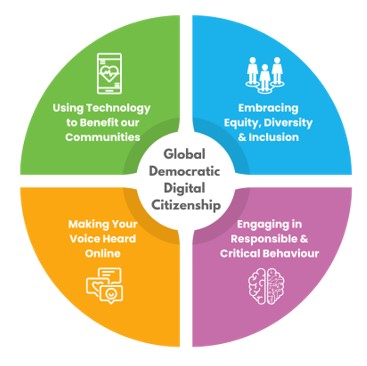
    In their conceptual framework for responsible democratic citizenship, Democrat8 outlines three core competencies of democratic behaviour: participation, deliberation, and critical commitment. For each of these competencies, we present examples of the kinds of knowledge, skills, and attitudes learners should demonstrate as effective global democratic digital citizens.

    Participation: Using technology to benefit communities through democracy

    The internet — social media, in particular — has become a platform for learning about and participating in discussions related to civic and political issues at the local, national, and global level.[9] Youth also regularly leverage digital media for political and social activism,9 including environmental stewardship.[10] Although youth are often excluded from physical democratic spaces,[11] technology enables their participation across geographical boundaries and through multiple modes of communication. 

    • Knowledge: Understanding the short- and long-term impact of my actions related to global and digital living and working online.
    • Skills: Developing empowerment for genuine participation.
    • Attitudes: Fostering compassion and empathy for those we interact with online.

    Participation: Embracing diversity, equity, and inclusion online

    Pluralism — coexistence of different religions, cultures, ethnicities, etc. — is a key value of liberal democracy.[12] While early models of citizenship emphasized individual accountability, a focus on equity, diversity, and inclusion emphasizes the importance of intercultural awareness and competence. With the recent explosion of accessible artificial intelligence (AI) models, youth are recognizing and challenging the obvious biases that exist in common AI algorithms, such as social media recommendation engines.[13]

    • Knowledge: Understanding the importance of cultural diversity, and differing beliefs, worldviews, and practices.
    • Skills: Discouraging and reporting inappropriate behaviour toward others online; conflict resolution skills.
    • Attitudes: Respect, openness, and care for the ideals and beliefs of others.

    Deliberation: Leveraging digital platforms to make your voice heard

    Formulating and communicating opinions and participation in public debate are key characteristics of global democratic citizenship.12,[14] Technology provides access to a broader scope of information, enabling youth to influence and participate in events from all over the world. Moreover, technological affordances such as livestreaming and long-form recording enable young people to share stories and versions of events that may otherwise be suppressed by traditional media.[15]

    • Knowledge: Understanding the importance of engaging in public political debate online.
    • Skills: Communicating and interacting effectively with others online.
    • Attitudes: Realizing that we are all responsible for what happens in our global community.

    Critical Commitment: Engaging in responsible and critical democratic behaviour online

    The internet enables anyone to be an author, regardless of their truthfulness or intent. Global democratic digital citizens have a responsibility to critically evaluate digital media and avoid perpetuating mis- and disinformation.[16]

    • Knowledge: Understanding the importance of acting democratically and responsibly in digital environments.
    • Skills: Combating hate and discrimination online through critical media literacy.
    • Attitudes: Valuing individual and collective responsibility, democracy, justice, equity, human dignity, and human rights.

    Overcoming the challenges recently posed to pluralistic liberal democracies necessitates the development of sustainable democratic behaviours and characteristics.8 The knowledge, skills, and attitudes that learners today need to be active participants in global society are increasingly mediated by digital technologies, so democratic and global citizenship frameworks need to be presented within the context of digital life and learning.

    Full manuscript in preparation.


    [1] Anderson, A., & Jiang, J. (2018, May 31). Teens, social media and technology 2018. Pew Research Center. https://pewrsr.ch/2kCW352

    [2] Statistics Canada. (2021). Smartphone personal use and selected smartphone habits by gender and age group. https://doi.org/10.25318/2210014301-eng

    [3] Eurostat. (2023b, May 22). Being young in Europe today – digital worldhttps://ec.europa.eu/eurostat/statistics-explained/index.php?title=Being_young_in_Europe_today_-_digital_world

    [4] Oxfam. (n.d.). What is global citizenship? https://www.oxfam.org.uk/education/who-we-are/what-is-global-citizenship/

    [5] Council of Europe. (2010). Charter on education for democratic citizenship and human rights education: Recommendation CM/Rec (2010)7 and explanatory memorandum. Council of Europe Publishing. https://www.coe.int/en/web/edc/charter-on-education-for-democratic-citizenship-and-human-rights-education

    [6] Vega, V., & Robb, M. B. (2019). The Common Sense census: Inside the 21st-century classroom. Common Sense Media.

    [7] Richardson, J., & Milovidov, E. (2022). Digital citizenship education handbook: Being online, well-being online, rights online. Council of Europe Publishing. https://www.coe.int/en/web/digital-citizenship-education/-/2022-edition-of-the-digital-citizenship-education-handbook

    [8] Democrat. (2023). Conceptual framework and vision: Responsible democratic citizenship and education for democracy. [Manuscript in preparation].

    [9] ​Gennaro, S. & Miller, B. (Eds.). (2021). Young people and social media: Contemporary children’s digital culture. Vernon Press.

    [10] ​Buchanan, J., Pressick-Kilborn, K., & Maher, D. (2019). Promoting environmental education for primary school-aged students using digital technologies. Eurasia Journal of Mathematics, Science and Technology Education15(2). https://doi.org/10.29333/ejmste/100639

    [11] Biesta, G. J. J. (2011). Learning democracy in school and society: Education, lifelong learning, and the politics of citizenship. Sense Publishers.

    [12] Parker, W. C. (2008). Knowing and doing in democratic citizenship education. In L. S. Levstik & C. A. Tyson (Eds.), Handbook of research in social studies education (pp. 65-80). Routledge.

    [13] Lamb, E. (2019, January 31). Even kids can understand that algorithms can be biased. Scientific Americanhttps://blogs.scientificamerican.com/roots-of-unity/even-kids-can-understand-that-algorithms-can-be-biased/

    [14] Straume, I. S. (2016). Democracy, education and the need for politics. Studies in Philosophy and Education35(1), 29–45. https://doi.org/10.1007/s11217-015-9465-4   

    [15] ​Laffier, J., Gadanidis, M. & Hughes, J. (2021). Youth’s relationship with social media: Identity formation through self-expression and activism. In S. ​Gennaro & B. Miller (Eds.), Young people and social media: Contemporary children’s digital culture (pp. 91-107). Vernon Press.

    [16] LaGarde, J., & Hudgins, D. (2018). Fact vs. fiction: Teaching critical thinking skills in the age of fake news. ISTE.

    Start the discussion at discourse.democrat-horizon.eu

  • Laboratoris vivents: un camí cap a l’educació democràtica

    Laboratoris vivents: un camí cap a l’educació democràtica

    Per Ebru Eren i Benjamin Mallon

    En un món que canvia tan de pressa, fomentar els valors democràtics i el compromís cívic entre els joves és més important que mai. A mesura que les societats enfronten desafiaments complexos, com el canvi climàtic, la pobresa, les violacions de drets humans, les amenaces a la ciberseguretat, les desigualtats educatives, l’augment de la població i la contaminació, les crisis migratòries i de refugiats, la inestabilitat i els conflictes polítics, les pandèmies, la intel·ligència artificial, la pèrdua de biodiversitat i altres, resulta vital dotar a les persones, especialment a les joves, d’eines per a participar activament en la democràcia. Els laboratoris vivents (living labs) són un mètode prometedor. Però, què són i com poden promoure l’educació democràtica? Explorem aquest concepte i el paper que poden exercir a Irlanda.

    Entenent els laboratoris vivents

    Els laboratoris vivents són plataformes dinàmiques per a la innovació i la resolució col·laborativa de problemes. Aborden entorns del món real en els quals diverses parts interessades treballen juntes per a desenvolupar, provar i millorar solucions a desafiaments complexos. Aquests entorns actuen com a laboratoris vius, permetent l’aplicació pràctica d’idees, fomentant l’aprenentatge mutu i permetent la millora contínua.

    En el context de l’educació, els laboratoris vivents ofereixen una oportunitat única per a reinventar l’experiència d’aprenentatge i conrear valors democràtics entre els estudiants. En reunir experts, professionals i joves, aquests laboratoris faciliten el diàleg, la col·laboració i la innovació. Els participants poden involucrar-se en activitats pràctiques, intercanviar idees, explorar nous enfocaments pedagògics i reflexionar sobre els seus rols com a ciutadans actius en una societat democràtica.

    El context irlandès: un pla per als laboratoris vivents

    La Dublin City University es el soci irlandès del projecte “DEMOCRAT: Educació per a una ciutadania democràtica responsable” (finançat pel programa Horizon Europe), que explora la integració de la “Educació per a la democràcia” en els sistemes educatius de la UE. Com a part del projecte, s’ha creat un laboratori vivent irlandès en la Dublin City University. El projecte, que es desenvoluparà entre 2023 i 2026, durà a terme sis tallers de tipus laboratori vivent centrats en diferents aspectes de l’educació per a la democràcia. Aquests tallers brinden una plataforma perquè els experts identifiquin desafiaments, desenvolupin solucions i realitzin recerques per a la creació d’un marc conceptual d’educació per a la democràcia. El laboratori vivent irlandès involucra a diverses parts, inclosos personal docent, formadors de docents, personal investigador, responsables polítics i joves. Aquest enfocament inclusiu fomenta la col·laboració i la cocreació, promovent un sentit de propietat i responsabilitat col·lectiva.

    El nucli de la iniciativa laboratoris vivents és la creació conjunta d’un marc conceptual d’educació per a la democràcia que abasti conceptes com “democràcia”, “participació política”, “desenvolupament sostenible” i “ciutadania responsable”. A través de la col·laboració multidisciplinària, les parts interessades desenvoluparan un marc sòlid  conceptual que orienti el disseny curricular i les pràctiques d’ensenyament. A més, els laboratoris vivents serviran com a plataforma de recerca per a comprendre les experiències dels participants i l’impacte de les iniciatives d’educació democràtica. Aquesta recerca definirà estratègies efectives per promoure els valors democràtics i el compromís cívic entre els joves. A més de la recerca, els laboratoris vivents posaran en marxa projectes pilot locals, que permetran als estudiants participar en activitats pràctiques que promoguin els valors democràtics i la ciutadania activa. Aquests projectes adaptaran el pla d’ estudis als contextos locals i incorporaran mètodes d’ensenyament innovadors.

    En conclusió, els laboratoris vivents ofereixen un enfocament prometedor per a l’educació democràtica, proporcionant una plataforma per a la col·laboració i la innovació. A través de la participació i la recerca inclusives, aquests laboratoris tenen el potencial de donar forma al futur de l’educació democràtica, empoderant als joves perquè siguin ciutadans actius i compromesos en les seves comunitats i més enllà d’aquestes.